
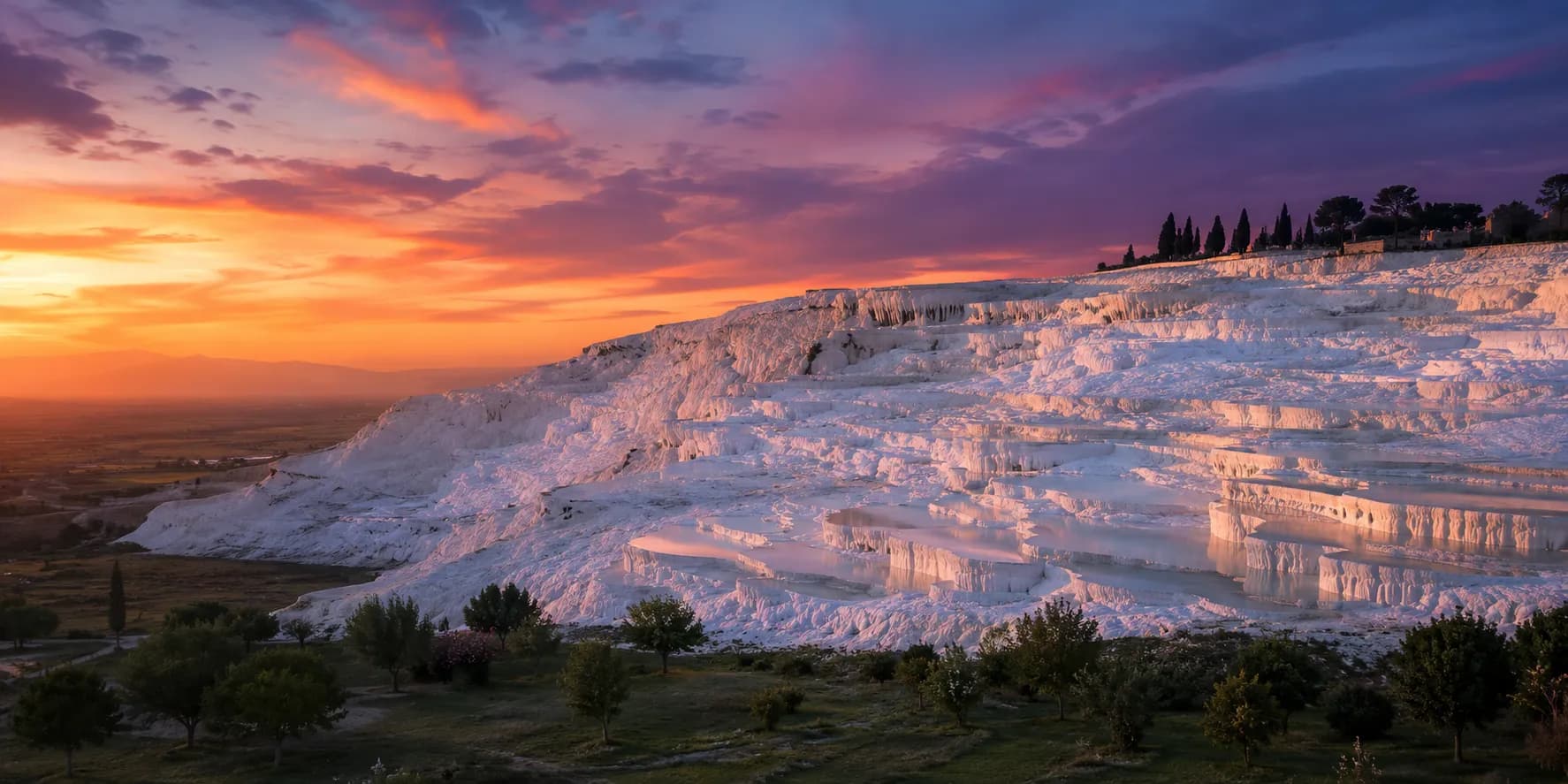
A white hillside you walk barefoot
Pamukkale
Turkey's 'cotton castle' — white travertine terraces and natural thermal pools.
- Best season
- April–June & September–October
- Ideal stay
- Day trip — no overnight
- Getting there
- Day trip from Antalya · ~3 hr each way
- Currency
- Turkish Lira (TRY)
- Language
- Turkish · English at the site
Why Go
About Pamukkale
Calcium-rich thermal water has been running out of this hillside for something like fifteen thousand years. As it cools it leaves its minerals behind, and over that time the deposits have built into a cascade of white basins stepping down the slope — travertine, bright enough that from a distance the whole hill looks like it is under snow. Pamukkale means cotton castle.
The Romans got here early. Hierapolis was founded on the clifftop in the second century BC as a spa city, and people came to take the waters and, often enough, to die here — which is why it has the largest ancient necropolis in Anatolia spread along the ridge. The theatre, cut into the hillside above the terraces, still has its stage building standing.
You walk the terraces barefoot, because shoes would damage the deposits. The water is warm, shallow and slightly slippery, and the walk down takes about half an hour if you do not stop — which nobody does.
Signature experience
Walking the travertine terraces and thermal pools barefoot
 Pamukkale
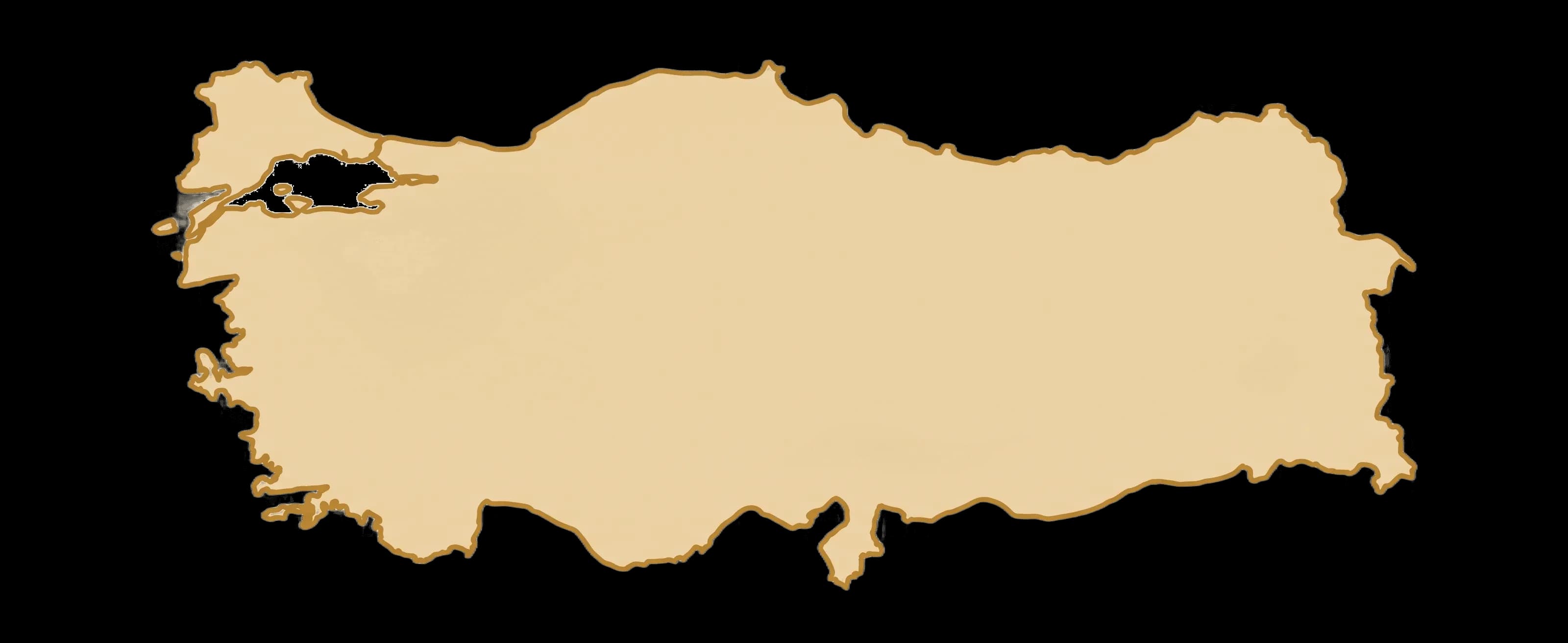
Pamukkale on the map of Turkey
What To Do
Top experiences in Pamukkale
The places our travellers talk about long after they get home.
 Signature
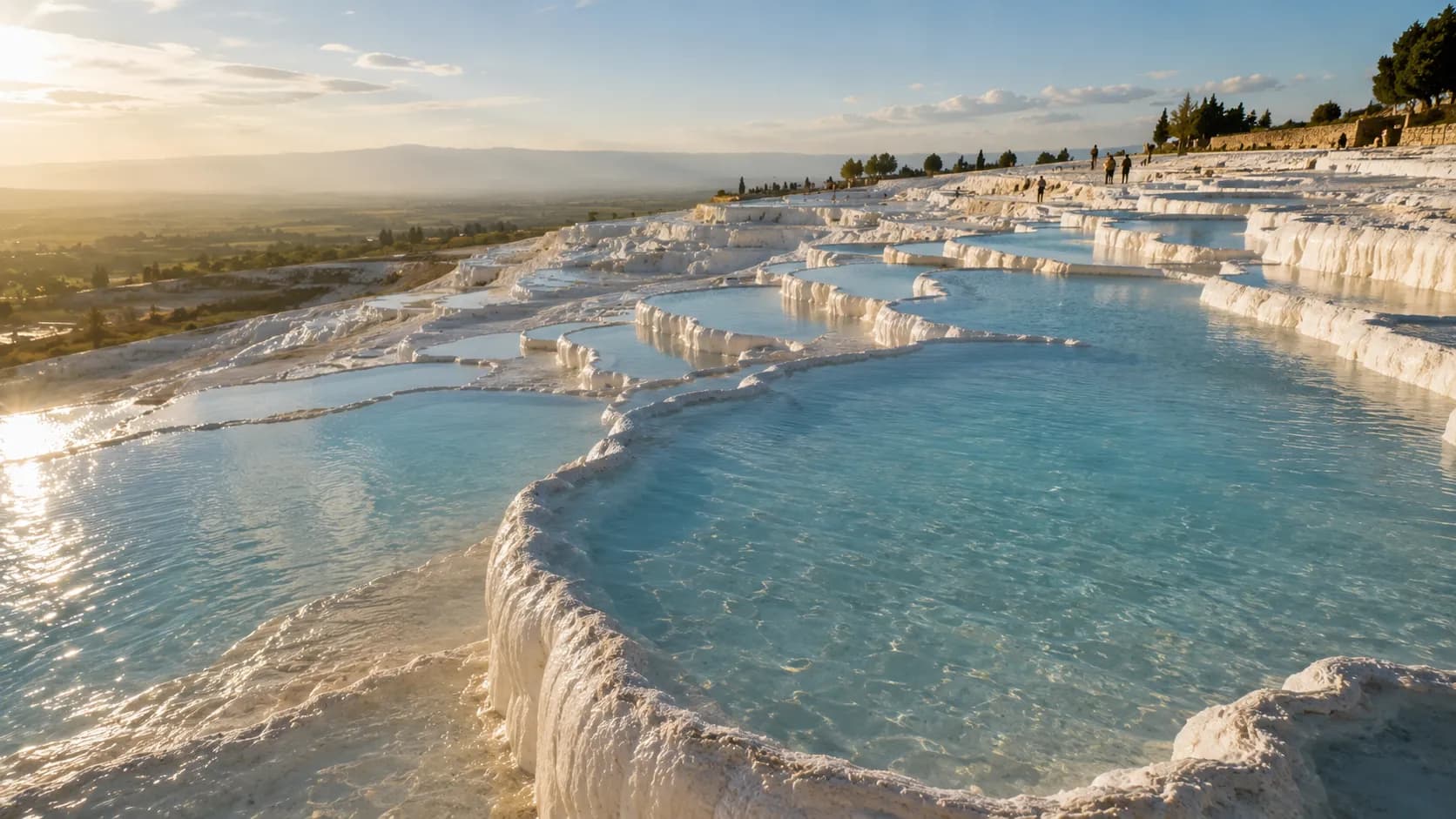
The Travertine Terraces
Shallow white basins stepping down the hillside, filled with warm mineral water you wade through barefoot. Roughly half an hour to walk down, far longer once you start stopping. Included on both Pamukkale packages.
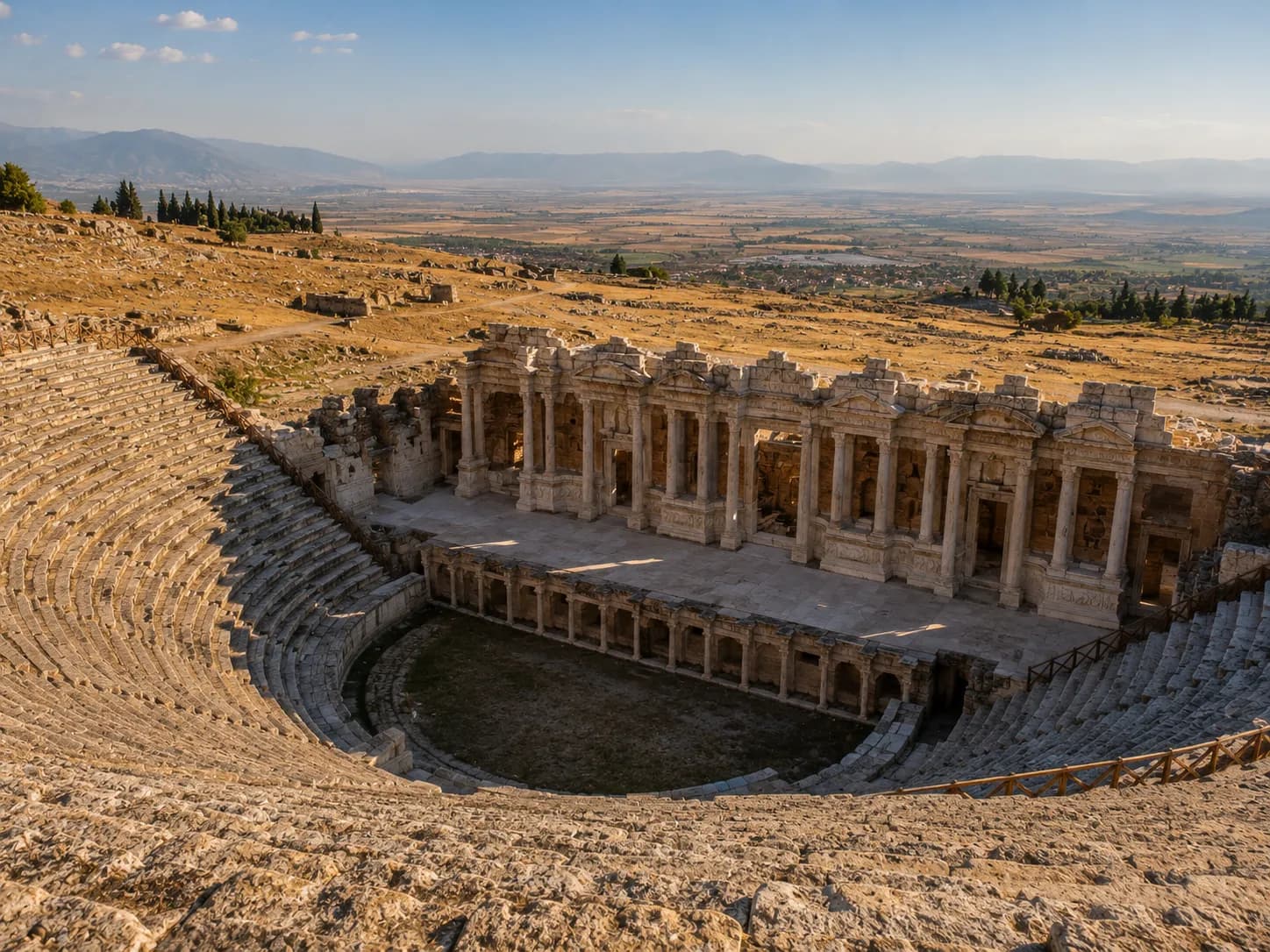
Hierapolis Roman Theatre
Cut into the hillside above the terraces and one of the best-preserved theatres in Turkey, with its stage building, carved friezes and seating for around twelve thousand still intact.
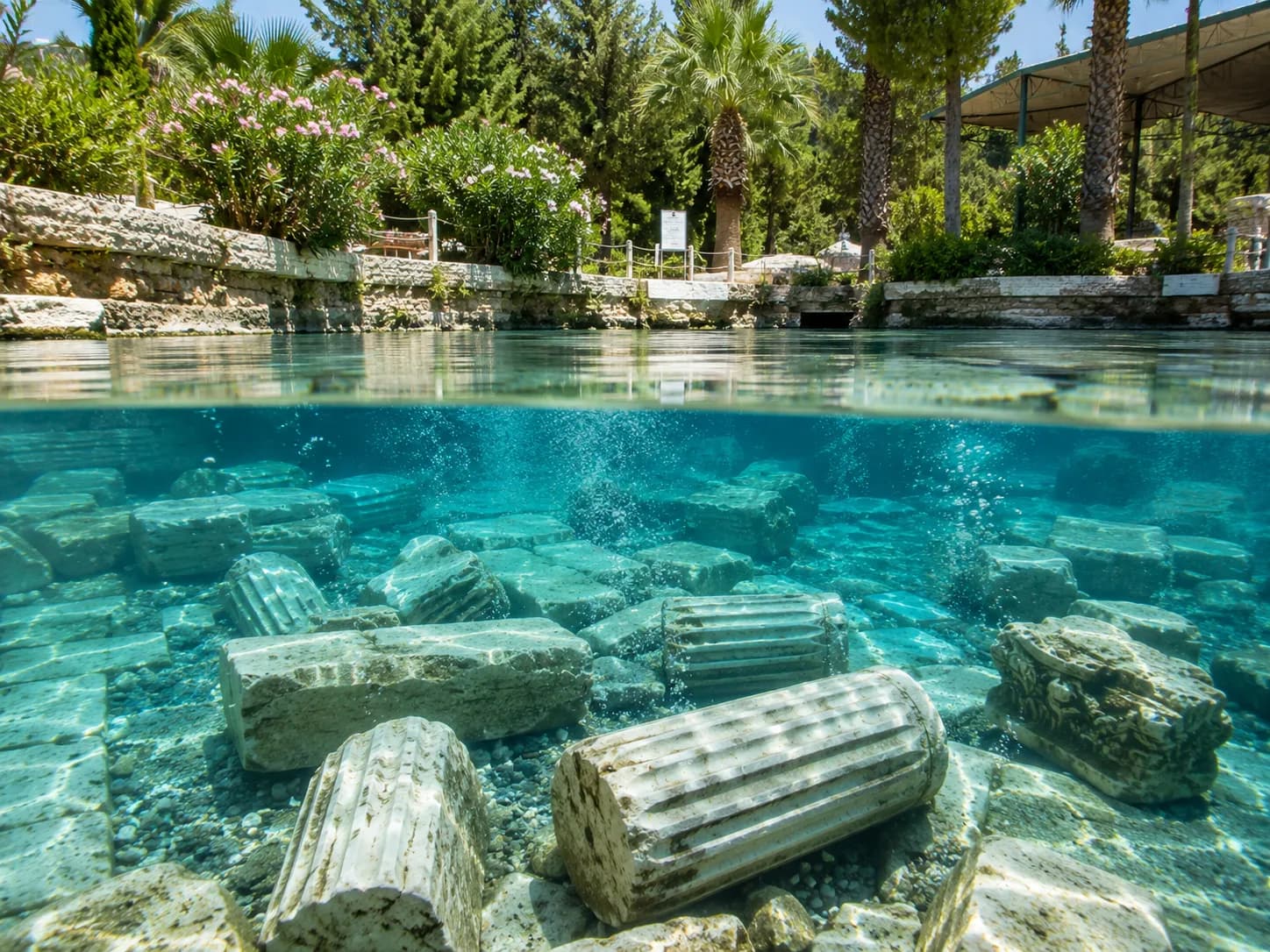
Cleopatra's Antique Pool
A warm spring-fed pool with fallen marble columns lying on the bottom, left there by an earthquake. You can swim among them — a separate entry fee on top of the site ticket, paid on the day.
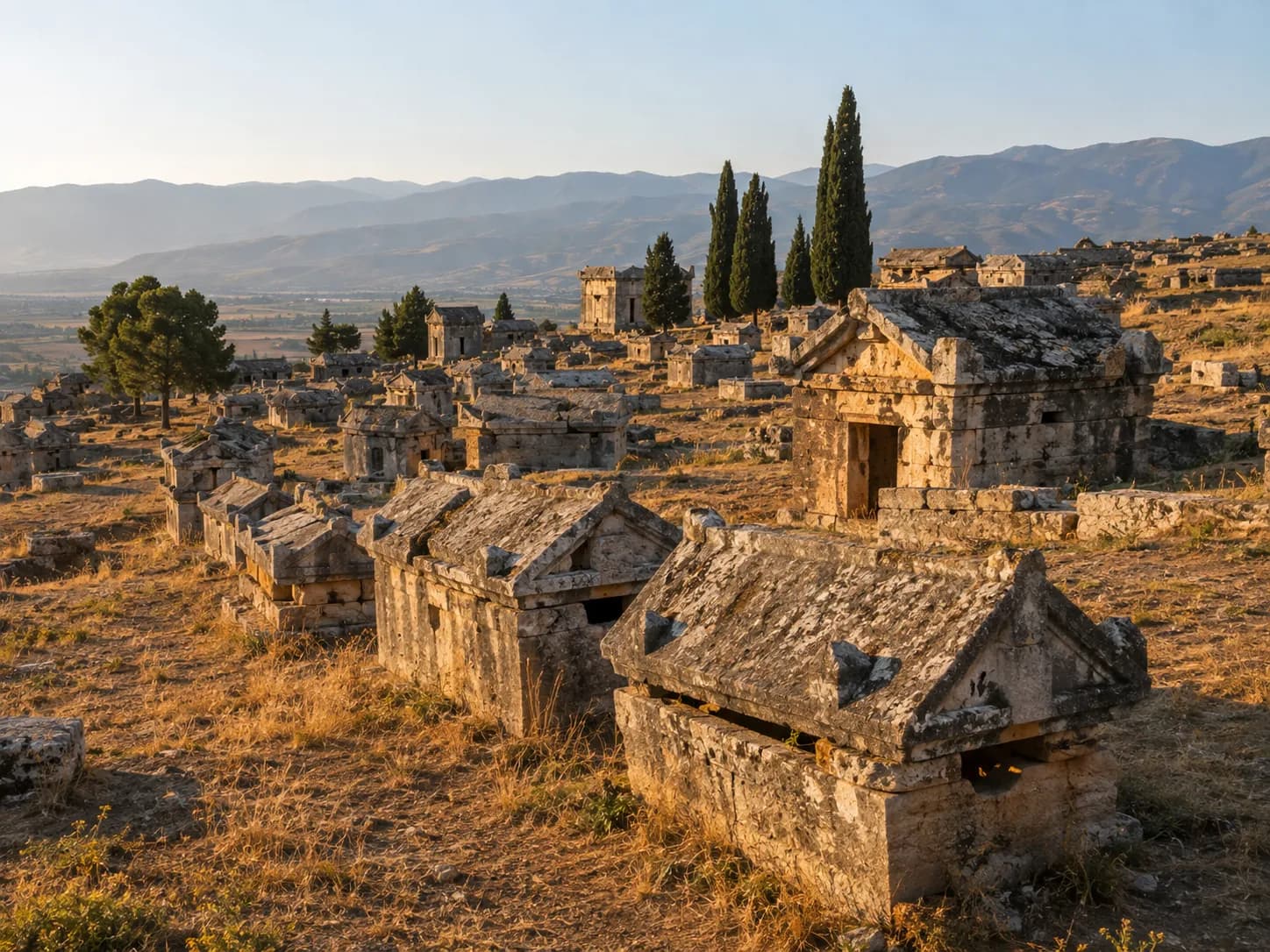
The Necropolis
More than a thousand tombs strung along the ridge above the city — house tombs, stone sarcophagi and burial mounds. The largest ancient cemetery in Anatolia, and eerily quiet compared with the terraces.
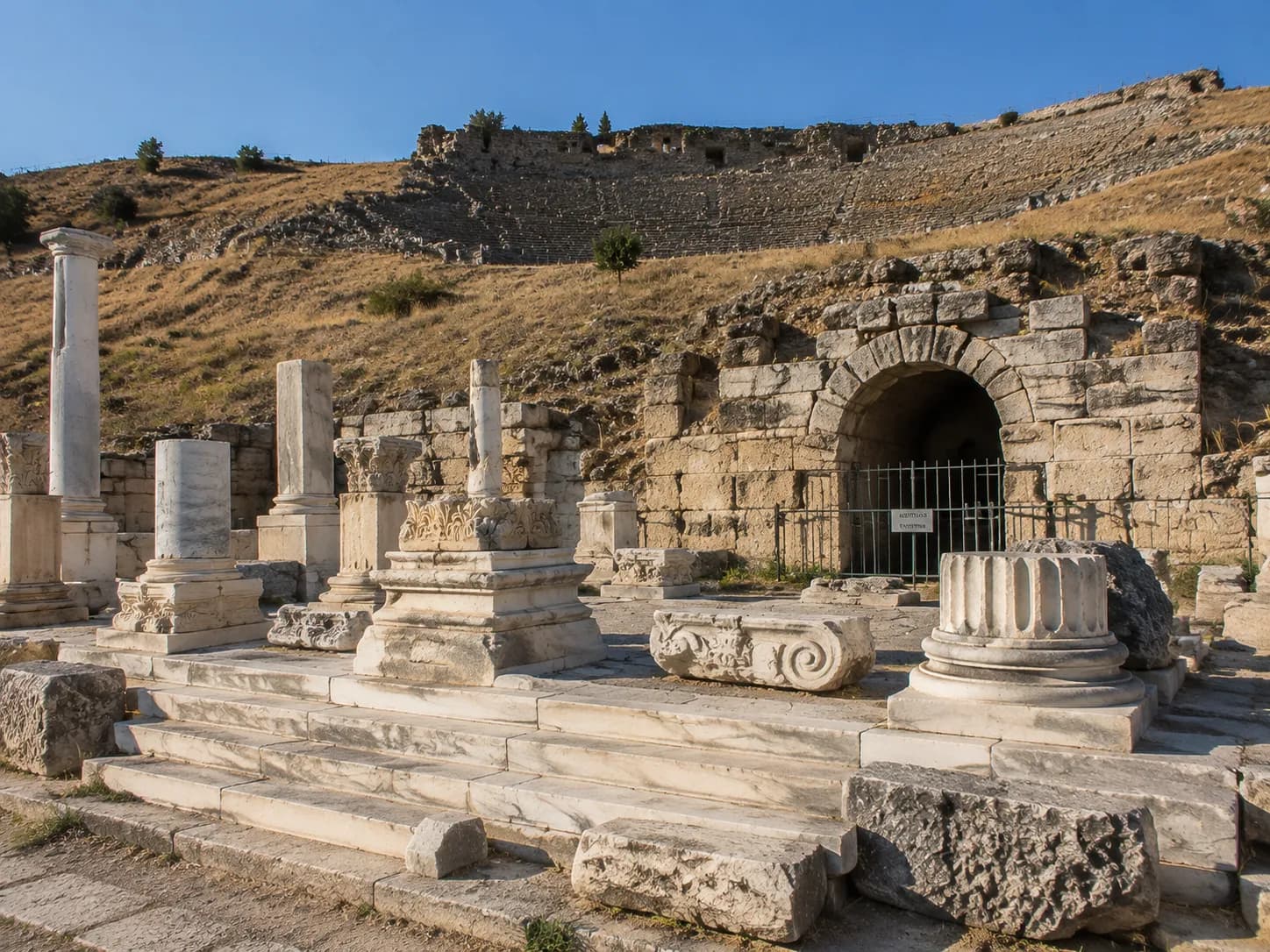
Temple of Apollo & the Plutonium
Beside the temple is a doorway the Romans called a gate to the underworld. It vents carbon dioxide, and animals led to the threshold died while the priests standing above them did not — a piece of theatre with a geological explanation.
Practical
Know before you go
The questions we answer most often — all of it visible up front, nothing buried.
This is a day trip, not a stay
Both of our Pamukkale packages run it as a full day out from Antalya with lunch, returning to your Antalya hotel the same night. It is roughly three hours on the road each way, so expect an early start and a late finish. If you would rather stay overnight nearby, ask us and we will price it separately.
Barefoot is compulsory
Shoes are not allowed on the travertines — they damage the deposits and the rule is enforced. You carry your shoes and walk the whole route barefoot on wet, slightly slippery calcium. It is fine for most people but worth knowing before you arrive.
Not every terrace holds water
Water is rotated between sections to protect the formations and let them recover, so some basins will be dry or shallow on the day you visit. The hillside is still spectacular, but the postcard image of every pool brimming is not what you should expect on any given morning.
Cleopatra's Pool costs extra
Swimming among the submerged Roman columns is a separate ticket on top of the Hierapolis site entry, paid at the pool on the day. Bring swimwear, a towel and cash if you want to do it — it is not covered by the tour price.
There is almost no shade
The terraces and the Hierapolis ruins are open, white and highly reflective, which makes the sun feel considerably stronger than the temperature suggests. Hat, sunglasses and high-factor sun cream are not optional in summer, and carry water.
What to pack for the day
Swimwear under your clothes and a small towel if you plan to get in, sun protection, water, and shoes you can slip on and off easily. A dry bag or plastic bag for wet things helps on the drive back.
How much walking
More than people expect. The terrace descent plus the Hierapolis site — theatre, necropolis, temple — adds up to several kilometres on uneven ground, some of it uphill. Tell us about mobility limits and the guide will shorten the route rather than leave anyone behind.
Food & prayer
Lunch is included on both packages, at a restaurant near the site. Meat is halal as standard, as across Turkey. There is a mosque in Pamukkale village at the foot of the hill, a few minutes from the lower entrance.
Book It
Tours including Pamukkale
2 packages, shortest first. Every one is customisable — hotel category, tours and group size.
Go Further
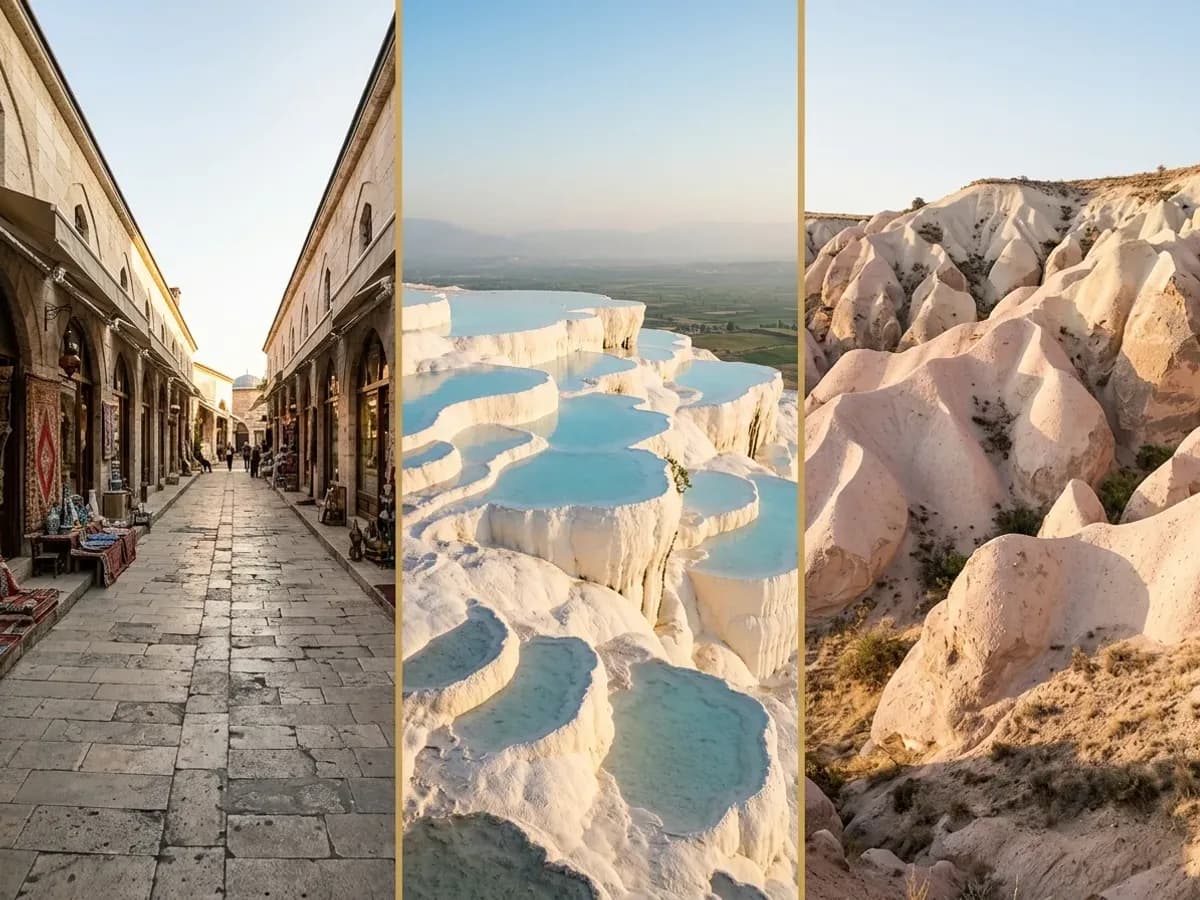
Pairs well with Pamukkale
Most travellers add at least one of these to the same trip.
Questions
Pamukkale FAQs
Do we stay overnight in Pamukkale?
No. On both of our packages it is a full-day trip from Antalya with lunch included, returning to your Antalya hotel the same evening. It is about three hours' drive each way. If you would prefer a night nearby, tell us and we will quote it as a change.
Can I swim in the travertine terraces?
You wade through them rather than swim — the basins are shallow, warm and only ankle to knee deep. For an actual swim you want Cleopatra's Antique Pool at the top of the site, which is deep enough and has the Roman columns lying on the bottom.
Do I really have to walk barefoot?
Yes, shoes are banned on the travertines to stop the deposits being worn away, and it is enforced. You carry your shoes and walk on wet calcium the whole way down. It is not painful, but it is slippery, so take your time.
Is Cleopatra's Pool included in the tour?
No. It carries its own entry fee on top of the Hierapolis site ticket, paid at the pool on the day. If you want to swim, bring swimwear, a towel and some cash.
Will the pools be full of water?
Some will, some will not. Water is rotated between sections so the formations can recover, which means part of the hillside is usually dry. We would rather say that now than have you compare the view with a photograph that was taken on a different rotation.
When is the best time to visit?
April to June and September to October. The white surface reflects heat fiercely in midsummer and there is virtually no shade, while winter brings cold water and cold wind on an exposed hillside.
Is it suitable for children or older travellers?
Children usually love the terraces. The limits are the long drive from Antalya, the barefoot descent on slippery ground, and several kilometres of walking around Hierapolis on uneven stone. Tell us your group's ages and we will plan a shorter route on the day.
Can I combine Pamukkale with other destinations?
It is already part of two of our longer routes, paired with Istanbul, Cappadocia and Antalya across nine to twelve days. Because it sits inland between Antalya and the Aegean, it slots most naturally into an itinerary that already includes Antalya.
Planning a trip to Pamukkale?
Email us your dates and group size and we'll put together options that fit — hotels, tours and transfers included.